
Get a Free Quote
 4008-693-698
中文版
4008-693-698
中文版
 4008-693-698
中文版
4008-693-698
中文版
 2026-08-25 09:23:38
In under‑floor heating floating‑floor slab projects, many projects fall into a common pitfall: focusing solely on the initial noise‑reduction performance of acoustic insulation mats while ignoring the special working conditions of under‑floor heating, including high temperature, heavy‑load bearing and wet‑construction operations.
This explains why, even after passing site acceptance, numerous projects suffer a host of problems within just a few years, such as deteriorated sound insulation, floor cracking and hollowing‑out, degraded under‑floor heating efficiency, and wasted floor height. The root cause lies in the use of general‑purpose floor acoustic mats as a substitute for dedicated mats designed for under‑floor heating floating‑floor systems.
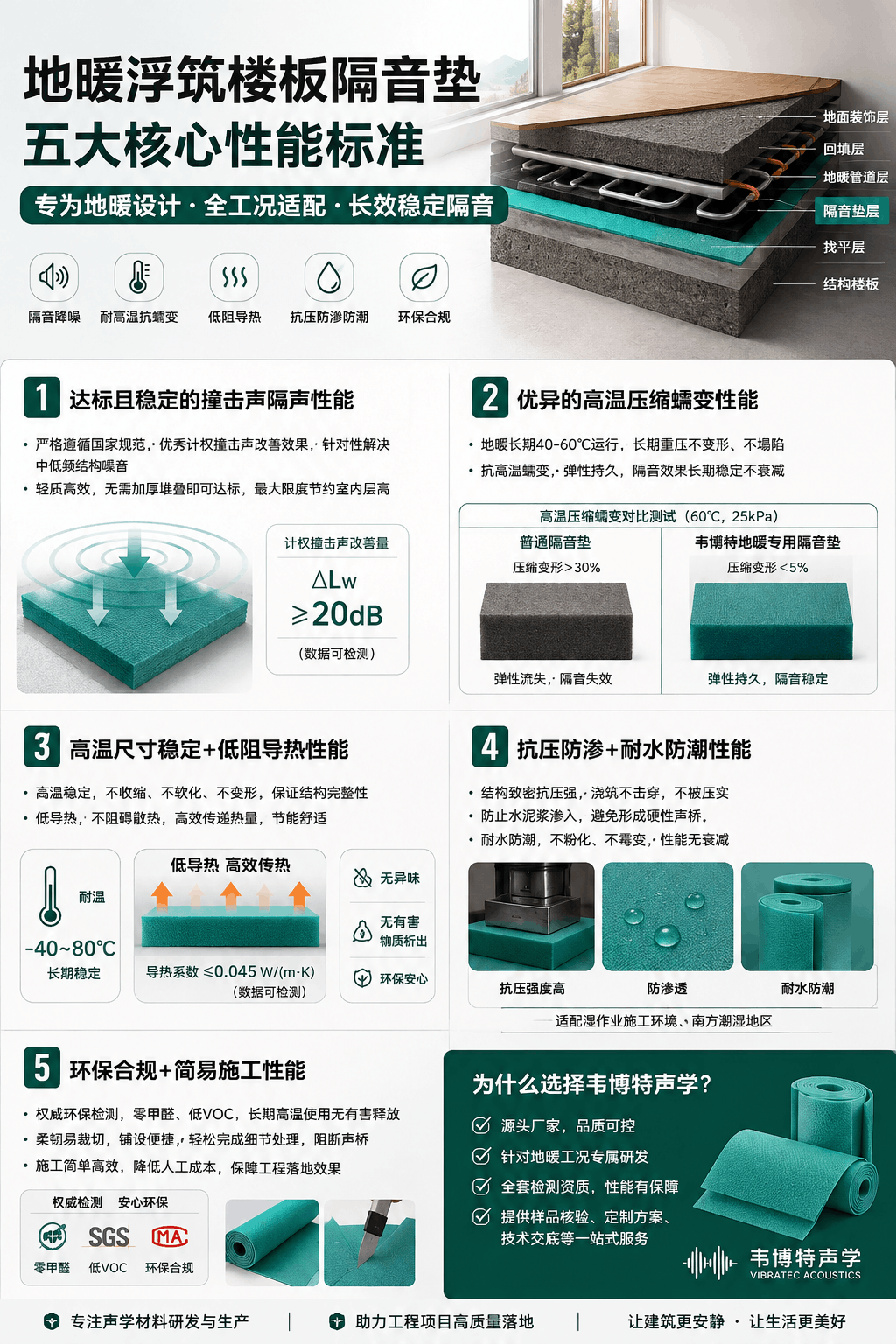
Performance requirements for acoustic materials used in under‑floor heating floating‑floor slabs are far more stringent than those for ordinary floor constructions. As an original‑equipment manufacturer with in‑depth expertise in acoustic materials, VIAB Acoustics draws on practical project experience accumulated across residential, hotel and public‑building under‑floor heating projects nationwide. We have systematically sorted out five core performance criteria that acoustic insulation mats must satisfy for under‑floor heating floating‑floor slabs. These also serve as key references for material selection by engineering teams, verification by clients and project completion acceptance.
The core design objective of floating‑floor slabs is to block solid‑borne sound transmission and mitigate impact noise between floors, including noise generated by daily walking, children running and jumping, and furniture dragging — this represents the fundamental core function of acoustic insulation mats.
Material selection shall strictly comply with national standards. Mats shall deliver excellent weighted impact sound improvement to specifically tackle mid‑to‑low‑frequency structural noise and guarantee successful acoustic acceptance. Meanwhile, the material shall be lightweight and high‑efficiency. It shall meet performance targets without extra thick stacking, so as to conserve indoor floor height to the maximum extent and adapt to diverse under‑floor heating project scenarios.
2. Excellent High‑Temperature Compressive Creep Performance
Resistance to high‑temperature creep is the most critical differentiator between dedicated acoustic mats for under‑floor heating and general‑purpose acoustic mats, and also a frequently‑overlooked key factor in material selection across the industry.
Under‑floor heating systems operate at a constant temperature of 40‑60 °C year‑round. The acoustic mats bear sustained heavy loads from concrete backfill, heating pipes and floor finishing layers. Subjected to the combined effect of high temperature and high pressure, ordinary foam‑based acoustic mats suffer irreversible permanent compression with complete loss of elasticity, which reconnects the previously broken sound bridges.
As a result, sound‑insulation performance deteriorates drastically and fails completely. It further triggers quality defects such as floor cracking and hollowing‑out. Therefore, qualified acoustic mats for under‑floor heating must feature outstanding high‑temperature creep resistance. They shall resist deformation and collapse under long‑term service conditions to ensure long‑term stability of the acoustic system throughout the building service life.
The core principle for under‑floor heating acoustic mats: isolate vibration‑borne noise only, without obstructing heat dissipation of the under‑floor heating system.
On one hand, the material shall possess superior high‑temperature stability. It shall not shrink, soften or deform under prolonged heating, preventing gaps caused by material deformation that would create new sound‑transmission sound bridges, and safeguarding the integrity of the floating‑floor slab structure.
On the other hand, its thermal conductivity shall match under‑floor heating operating conditions. It must not function as a thermal insulation layer, so that floor heat‑dissipation efficiency remains unaffected, avoiding slow indoor temperature rise and increased heating energy consumption.
In addition, under high‑temperature operating conditions, the material shall produce no odour and release no hazardous substances, fully complying with environmental‑protection standards for indoor habitation.
4. Compression Resistance, Anti‑Seepage and Moisture‑Water Resistance
Wet mortar backfilling is adopted for under‑floor heating floating‑floor slabs. During construction, acoustic mats come into direct contact with cement mortar and withstand impacts such as scouring, erosion and transient heavy loads. Accordingly, the acoustic mats shall feature dense structure and sufficient compression resistance. They shall not be compacted or punctured during pouring, effectively preventing cement slurry from infiltrating into the material interior to avoid rigid sound bridges, thus eliminating hidden acoustic risks at the construction stage.
Furthermore, for wet‑construction conditions and projects in highly‑humid southern regions, the acoustic mats shall deliver favourable water and moisture resistance. They shall not pulverise or mildew upon water exposure, with no performance degradation, to adapt to diverse construction environments nationwide.
Acoustic mats form part of concealed permanent floor works, so material compliance is a bottom‑line requirement. Products shall pass authoritative environmental‑protection tests with zero formaldehyde and low‑VOC emissions. No harmful gases will be released even under long‑term high‑temperature service, safeguarding indoor air quality and residential safety.
From the construction perspective, the material shall have good flexibility for easy cutting and installation. It facilitates detailed operations such as wall‑edge upturning and pipe wrapping to fully block peripheral sound bridges. It simplifies construction procedures, cuts labour costs and guarantees the on‑site performance of the complete floating‑floor acoustic‑insulation system.
Closing Remarks
Material selection for acoustic mats in under‑floor heating floating‑floor slabs depends not on isolated sound‑insulation figures, but on comprehensive adaptability across full operating conditions: high temperature, heavy‑load bearing and wet‑construction environments. The five key performance indicators — sound insulation, creep resistance, thermal conductivity, compression‑and‑moisture resistance, environmental‑friendliness and constructability — complement one another, and none can be dispensed with.
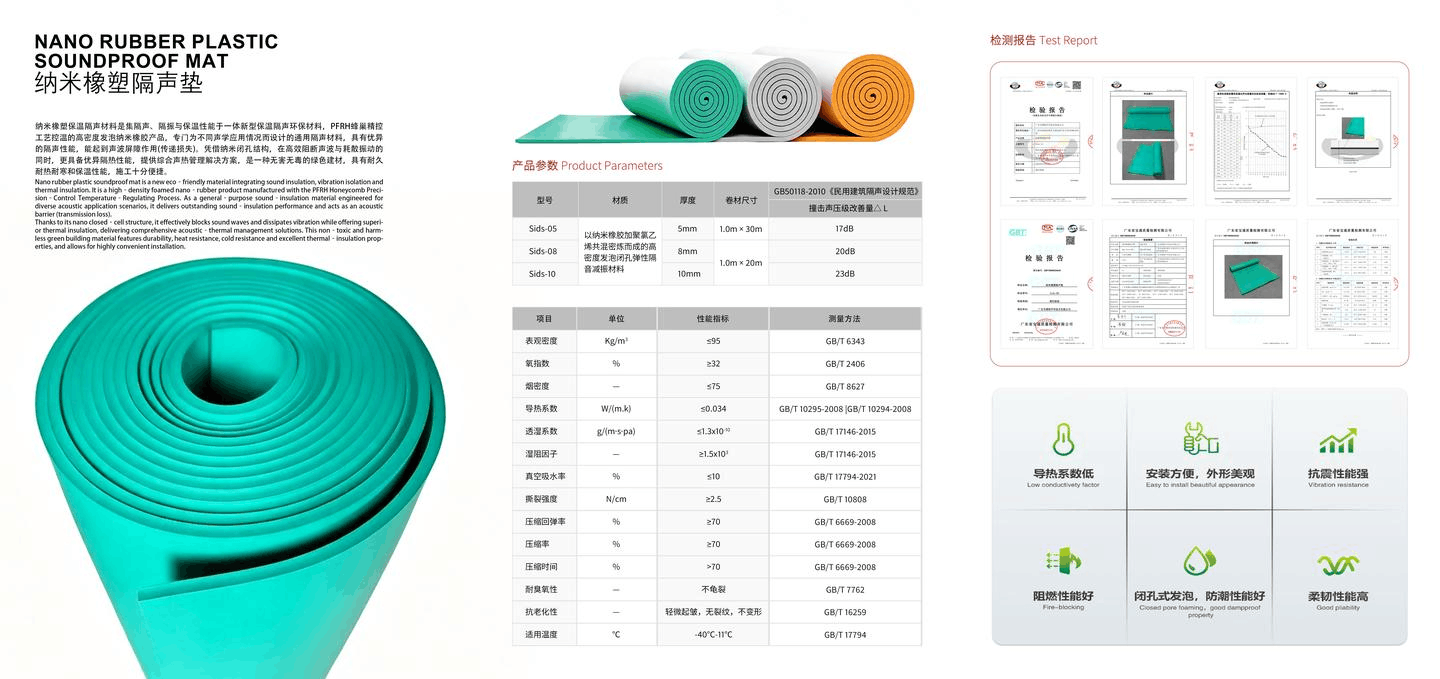
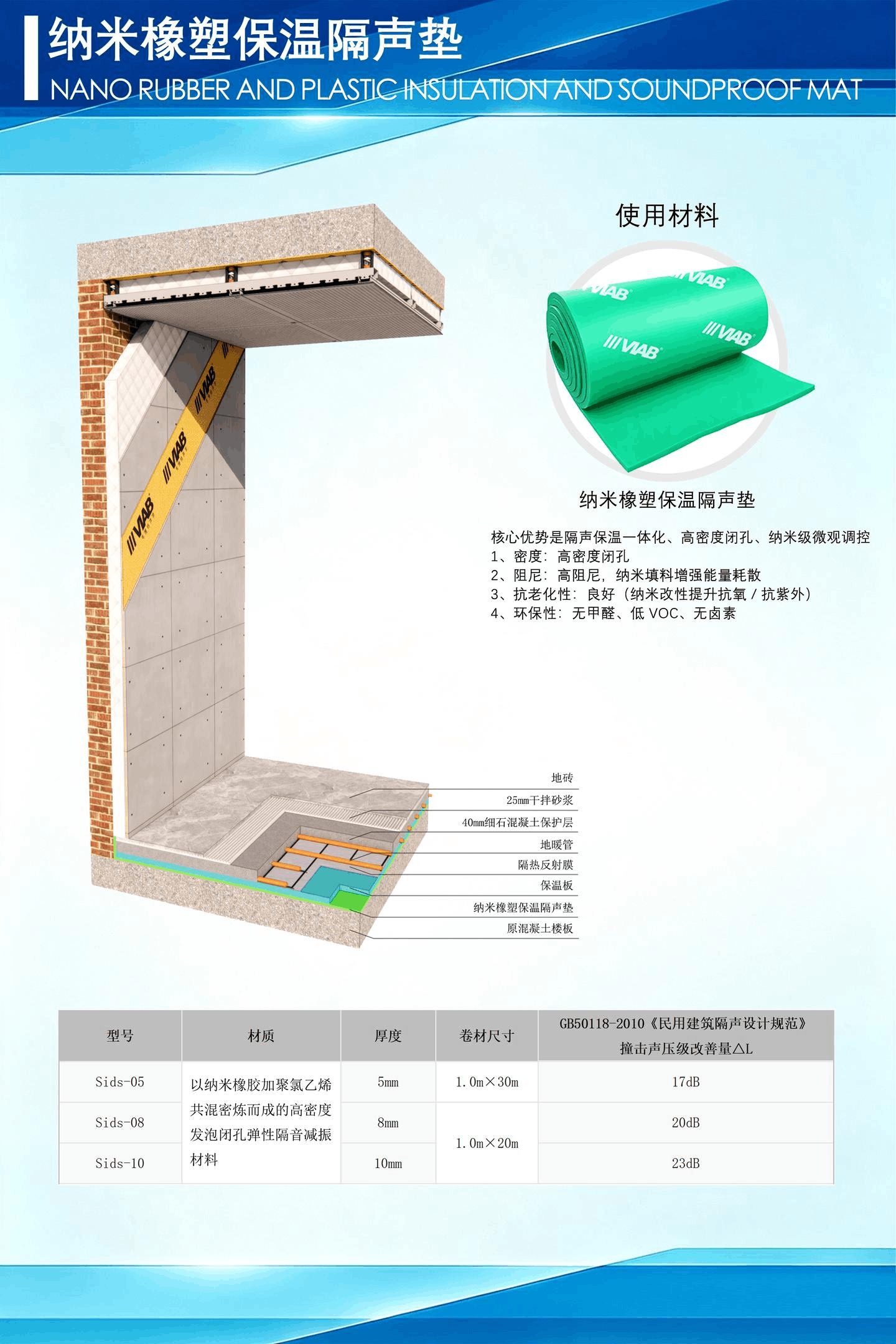
VIAB Acoustics dedicated acoustic mats for under‑floor heating are specially developed for heating‑specific service conditions. They fully comply with construction standards for various under‑floor heating floating‑floor slabs, and fundamentally prevent common engineering defects including sound‑insulation failure, floor cracking and poor heating efficiency.
As an original source manufacturer, we provide one‑stop services including sample verification, complete sets of test certificates, custom‑tailored acoustic solutions and on‑site technical briefing, to fully support high‑quality delivery of engineering projects.
Should you have demands for acoustic mat selection or project solutions for under‑floor heating, please feel free to contact us via private message!

Contact Person: Manager He 13556110648
Address: Room 5022, No. 228 Qiaotou Street, Haizhu District, Guangzhou
 Scan QR Code for WeChat Consultation